From checking the balance to following a plan
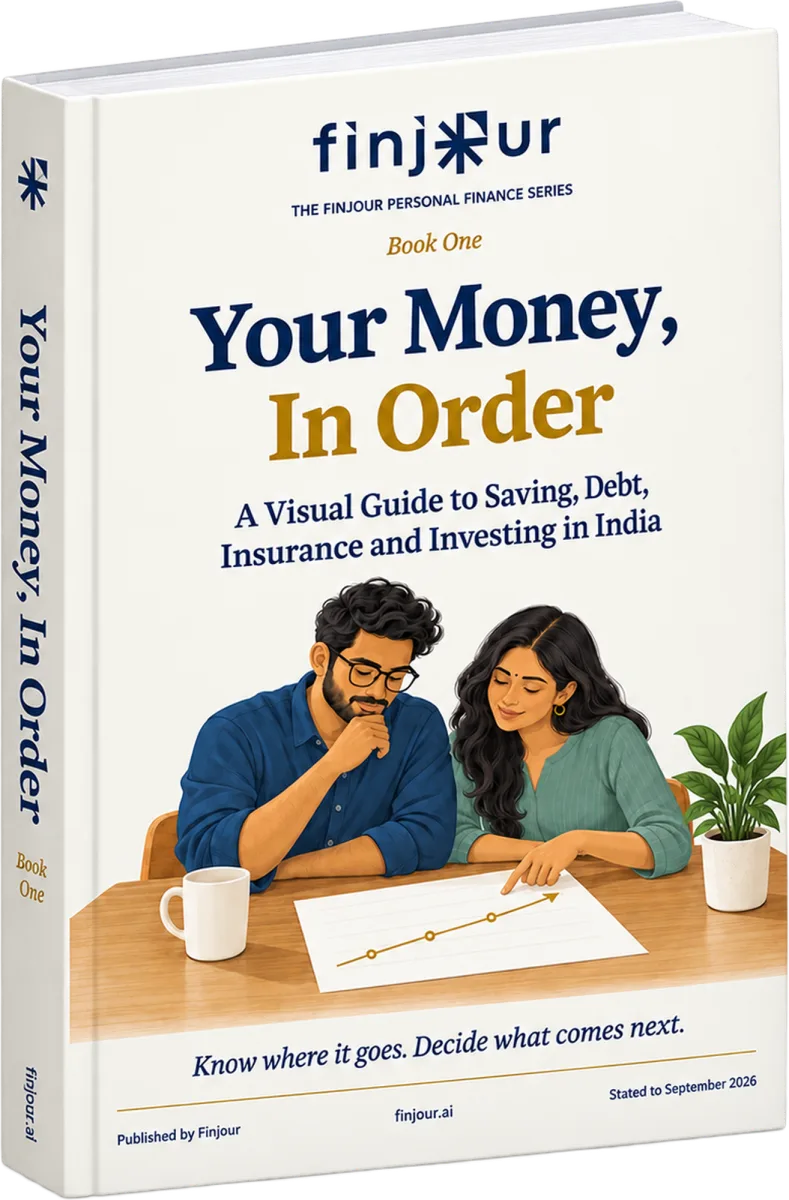
Know where it goes, and decide what comes next. A visual guide to saving, debt, insurance and investing in India, with more than twenty worksheets and a thirty-day setup.
Book One of the Finjour Personal Finance Series. Stated to September 2026.
What You'll Learn
Take a Sneak Peek
Four things to put in order, in order
Most money mistakes are not really mistakes. They are decisions made from the account balance, because it was the only number available at the time. These are the four things that make a better number available, in the order they have to happen.
01
Seeing the month you are actually in.
What reaches you, what is already committed, what you own against what you owe, and what your goals would cost if you gave each one a price and a date. Income is a resource, and a plan gives it jobs. Covered in Part 1.
02
Making the month work, and holding a reserve.
A budget you can live with rather than abandon, a payday routine, how much emergency money is enough for your situation specifically, and what a raise or a bonus really costs once it is spent on an upgrade. Covered in Part 2.
03
Protecting what a bad year would otherwise take.
Health cover and what it could still leave you paying, who would need money if you could not provide it, what happens when you cannot work, how to recognise a scam or a mis-sold policy, and a family money file the right person can actually find. Covered in Part 3.
04
Borrowing, buying and investing with the arithmetic visible.
What a loan costs across its whole life rather than per month, which debt to clear first, whether to prepay or invest, what you are actually buying when you buy a fund, and how retirement, tax and a partner or children change the plan. Covered in Parts 4 to 6.
One worked example runs through the borrowing chapter: ₹3,00,000 borrowed at an assumed 12% a year. Over 36 months the payment is about ₹9,964 and the interest is ₹58,715. Stretch it to 60 months and the payment falls to about ₹6,673, which feels easier, while the interest rises to ₹1,00,400. The monthly payment drops by roughly ₹3,291 and the loan costs ₹41,686 more.
Signs your money is running you rather than the other way round
From deciding by balance to deciding by plan
Income is a resource, and a plan gives it jobs. The jobs can coexist: living today, meeting obligations, preparing for irregular costs, keeping a cushion, and funding future choices. A plan also states what changes when one assumption fails, whether that is a late salary, an extra bill, or a slower month of business income.
Deciding from the balance
Deciding from a plan
Read it, then tell us what you think
Why this guide exists
You may already have a bank account, a loan, an insurance policy and an investment app, and still find one ordinary question difficult: what can I safely do with my money next? That question does not get easier by adding another product. It gets easier by seeing what the money is already committed to.
Finjour has worked on the financial side of Indian businesses since 2015. The same gap kept showing up in the people inside them: capable earners with no clear view of their own month, making decisions from the account balance as though the rupee sitting there had not already been promised somewhere else.
So this book was written the opposite way round from most money advice. It starts with your life rather than with a product, it shows the arithmetic instead of asserting a conclusion, and where it relies on a rule it names the section so you can check it. It does not tell you what you should be worth by a certain age.
30
Chapters
across six parts
20+
Worksheets
0
Products recommended
by design
Sectorssalaried · self-employed · business owners · families · first-time earners · anyone with a loan
The mistakes that cost the most, quietly
None of these come from carelessness. They come from being shown one number when the decision needed two, and the book addresses each where it arises.
Treating the account balance as spare money
Separate income, commitments, reserves and goals before anything is called spare
Choosing a loan by its monthly payment
A lower payment may be necessary, but it is not the same as a cheaper loan
Guessing at how much emergency money is enough
Work it from your own costs and situation rather than a borrowed rule of thumb
Assuming a policy covers what you think it covers
Ask what this policy would still leave you paying, and answer it in rupees
Spending a raise before deciding what it is for
The cost of an upgrade is permanent in a way the raise often is not
Leaving your affairs where nobody else can find them
The family money file: an index the right person can use at the worst moment

30
chapters across six parts, each closing on a checkpoint you can answer
20+
worksheets, referenced from the chapters that use them
30 days
to see, organise, decide and connect, as a setup sequence rather than a deadline
₹41,686
the cost of the longer term on one ₹3,00,000 loan, worked in full
What You'll Walk Away With
See the whole month, not the balance
The account balance is the worst number to decide from, because it does not know what has already been promised. You will be able to separate what reaches you from what is committed, what is held in reserve, and what is genuinely free to allocate.
Know what a loan actually costs
Lenders quote the monthly payment. The book shows the whole life of the loan next to it, with the arithmetic visible, so a longer term stops looking like a cheaper one and you can tell the difference between a payment you can manage and a loan you should take.
Hold the right amount of emergency money
Not a rule of thumb borrowed from another country, but a way of working out how many months of which costs your own situation needs, and where to keep it so it is actually reachable when something goes wrong.
Check what your cover would really leave you paying
Health and life cover explained by the questions that matter: what this policy would still leave you paying, and who would need money or care if you could not provide it. Plus how to recognise mis-selling and the pressure to act quickly.
Leave your affairs findable
The family money file is the chapter most people skip and most families need. Not a list of passwords, but an index that lets the right person find the right information at the moment they have to.

30 Chapters of Actionable Content
255 pages of structured, India-specific reference material.
A bank notification tells you money arrived. It does not tell you how much is already committed or which annual bills are approaching. Income is a resource, and a plan gives it jobs: living today, meeting obligations, preparing for irregular costs, keeping a cushion, and funding future choices.
Most money advice vs this guide
Common Questions
No, and that is deliberate. The book starts with your life rather than with a product. It explains what you are actually buying when you buy a mutual fund or an index fund, how to tell a portfolio from a collection, and how to judge whether an investment fits a goal you have already given a price and a date. What it will not do is name a product, promise a return, or tell you what you should be worth by a certain age.
Start with your life. Not with a product.
Thirty chapters, more than twenty worksheets, and a thirty-day setup to see what exists, organise the month, decide what comes next, and keep the plan working. Worked in rupees, cited to the rules, and yours to keep.